![[Earth icon]](../emblem64.jpg)
Gardening for wildlife
by Danuta Hart; first published 29-May-2026
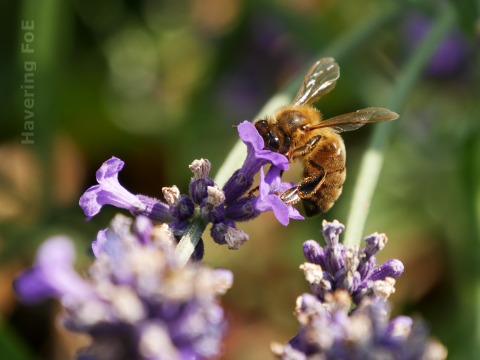
Lavender is very attractive to bees - John Robinson
The UK is one of the most nature depleted countries in the world, ranking among the bottom 10% globally. That's why we must all do our best to reverse this trend.
A pond will attract a variety of wildlife. Insects will lay eggs in the water and these will grow to feed birds. You may soon notice newts, frogs and toads, the last two helping you get rid of slugs and snails. You can create a mini pond involving your children by using a large bowl and digging a hole just bigger than the container and lowering it in. Put a layer of clean small stones at the bottom and larger ones to provide an escape route for pond creatures. You could add a few aquatic plants to shelter wildlife and oxygenate the water.
It is important to provide a bird bath (off the ground, safe from cats) and ensure it is regularly cleaned, to avoid spread of disease. Replenish it with fresh water daily throughout the year. It is beneficial not just for birds but also insects which are in decline and need every support possible.
Not everyone is keen on ivy but it is great for wildlife creating shelter for birds. Flowers and pollen will attract insects whereas berries feed birds throughout winter and spring, just as berries do on any other shrub. Alternatively, plant climbers against a fence. Honeysuckle and evergreen star jasmine attract moths and robins can nest in it. Mahonia, a hardy evergreen shrub with bright yellow flowers, helps overwintering bees.
The right flowers can reduce the need for commercial pesticides which are lethal to wildlife and highly carcinogenic. If necessary only use natural ones.
Penstemons attract ladybirds, cosmos will draw in hoverflies and aphid killing lacewings and will flower for months if you keep deadheading. Herbs such as marjoram, chives, sage, rosemary, dill and fennel provide well loved flowers for pollinators. Don't forget lavender.
When planting flowers choose single petal varieties and plant for all seasons starting with snowdrops and crocuses.
Flowering fruit trees provide blossom and bark for insects to shelter in. Even small spaces can allow room for an apple tree in a pot.
Dead logs will create a habitat for beetles, wood lice and other insects. You can create a home for solitary bees by stuffing bundles of dead hollow stems such as alliums or bamboo into empty pots or crevices in the wall.
Good luck!