![[Earth icon]](../emblem64.jpg)
Protect our wildernesses
by Peter Caton; first published 6-Mar-2026
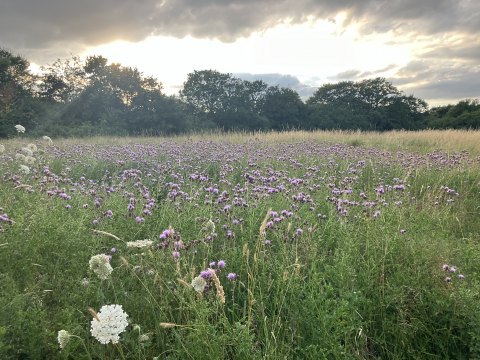
Is this land in Cranham a "micro-wilderness"? - Peter Caton
Two years ago I published a book, Dartmoor: England’s Last Wilderness? questioning whether Dartmoor is a wilderness and if so, is it, as some claim, England’s last. In doing so I considered the definition of "wilderness" and wrote about a small area close to our Upminster home, which seemed to meet most of the criteria to be classed as a wilderness.
On the edge of Cranham is the well-managed nature reserve known as the Brickfields. A strip of land between this and houses has been abandoned for probably seventy years. Inevitably there have been proposals to build on it but so far these have been fought off. As I walked through here one day it struck me that this small piece of land, roughly 330 by 130 metres, meets many of the criteria for wilderness. In fact, it meets almost all the main dictionary definitions: natural, uncultivated, undeveloped, uninhabited and not used by humans. The land was last cultivated in World War Two and after being left to nature most of it is now dense scrub, with some well-established trees, a marshy area, a path and a few open glades. It is arguable whether historical cultivation rules it out but other than this, according to the definitions the land could easily be described as wilderness.
Perhaps we could use the term "micro-wilderness"? I wondered what other examples there are in Havering and thought back to my walk in North Ockendon last summer, on the huge site of the proposed data centre. Here were pockets of land which remain natural and unused – corners of fields with wildflowers, shrub, patches of nettles and brambles. These are places where birds feed and nest, butterflies flutter, badgers forage and voles hide. But this is a place that Havering Council want to dig up and replace with huge warehouse-type buildings.
On a slightly larger scale, two areas in Havering, Rainham Marshes and Hornchurch Airfield, were for many years protected from development by military use, then abandoned. Both became "micro-wildernesses", diverse homes for wildlife and are now carefully managed, providing access for people and habitat for nature.
Havering's "micro-wildernesses" provide refuge for a huge range of animals, birds, insects and plants. They are immensely valuable land, helping the Borough to breathe and for people to live alongside nature but they are also vulnerable to development. Once built on they are lost for ever and like all of our green belt, they must be protected.